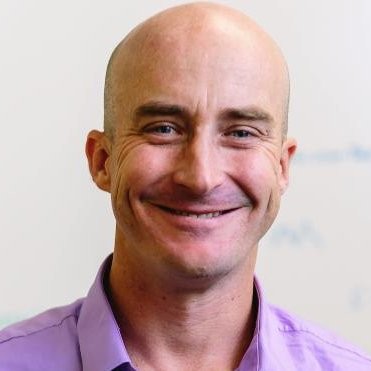
When Nick and I joined pharma, our goal was to leverage AI and Machine learning to optimize the current drug discovery pipeline. I’d argue that we were largely successful in this regard, shipping industry-leading platforms across all stages of the early discovery pipeline.
That pipeline is well designed to discover diseases where a small number of genetic changes, typically inherited, are the causal drivers. However, it has become clear that there is a subset of diseases for which this pipeline is ineffective. This is especially true for cancer.
Cancer is often highly heterogeneous. The difference between healthy and diseased cells is controlled through complex cell regulation, epigenetic differences, and external signalling rather than a single molecule. A cell with the same genetics can undergo a complete lineage switch. Because GWAS or large-scale screens do not expose the biological differences between healthy and diseased cells, we often remain blind to the mechanisms driving disease and are unable to design effective drugs. The result is an early target pipeline with an average cost of $30 million and a 4–7 year timeline that still enters phase trials with only a 3.6% chance of FDA approval.
This might have been insurmountable 5 years ago, but recent advances in AI and novel modalities are presenting new building blocks to overhaul the pipeline for oncology. Active learning systems can iteratively discover biology at scale. AI based phenotyping allows us to effectively calculate the derivative between cell states. Emerging modalities offer unprecedented fine-grained control over cell state. AI agents and the emerging AI ecosystem suggest a route to automate and scale upwards of 90% of limiting steps. All of this enables something new: a platform that can force cells (in vitro) into diseased states and back, while learning the underlying biology, at scale. e.g. a system that can learn specific differences between diseased and healthy cells at scale.
If successful this would be transformative for research into oncology and complex diseases in general. The moment it became clear how big of an opportunity this is and how much an impact it will have on cancer drug development, Nick Peterson and I had no choice but to go all in. The requirements were sufficiently different that it needed to be a new company, built AI native from the ground up, with a laser focus on controlling cell state transitions.
As a result, today we’re announcing the formation of Clockwork Bio, an almost autonomous drug development platform and company designed to automate pre-clinical drug discovery for oncology. We’re in stealth mode, but we will make periodic announcements as we get closer to launch. Look for updates and a formal product launch later this year.
Oh, and if you’re interested in working at the cutting edge of AI and biology, and think it’s time that we, as a society, should be done with cancer? Reach out. There’s lots to do.
S.